Beyond The Missing Middle
Tall towers are good actually.

Introduction
Housing between single-family homes and high-rises, or the missing middle, is commonly promoted by housing commentators. The missing middle is real, and its proponents are often helping move the supply curve in the right direction.
But many popular claims about its benefits are overstated and operate more as criticisms of high-rises. This can push the supply curve in the wrong direction when the reforms they want don’t materialize, but the reductions in high-rises do.
In order to advocate for relaxing supply constraints and allowing both more missing middle and more high-rises, here are the myths we’ll examine:
Cheaper to build means cheaper homes
People prefer lower density
If we allow high-rises everywhere then everything would be a high-rise
Allowing missing-middle means it gets built
Myth 1: Cheaper to build means cheaper homes
A common assertion by density advocates is that multi-story housing will lower costs for young buyers who are the most obvious victims of the steady climb in prices. In reality, high density housing is more expensive… in large part due to the need for more expensive, energy hungry materials like steel rather than wood.
Missing middle is cheaper to build. Excluding land, it costs about $200 to $400 per square foot to convert or redevelop a detached house into a fourplex. By contrast, the cost for a new high-rise development is currently upward of $600 to $800 per square foot in our major urban markets. If the goal is to create greater housing affordability, then we need to start putting people into housing that is more affordable to build.
It’s true, the tallest buildings are more expensive to build.
But cheaper to build does not mean cheaper to buy.
Even if costs are cheaper, limits that prevent developers from building high-rises raise prices because it limits housing construction and pushes the supply curve leftwards. The total cost of a home includes land costs. Restricting height can increase average total cost per unit even if it reduces average construction costs per unit. As it says in “The Apartment Shortage” by Keaton Jenner and Peter Tulip from the Reserve Bank of Australia,
“expensive land makes medium-density housing considerably more costly than high density.”
Reducing costs via improvements in technology or falling commodity prices shifts both marginal costs and the supply curve rightward. But reducing costs by constraining supply cannot reduce prices.
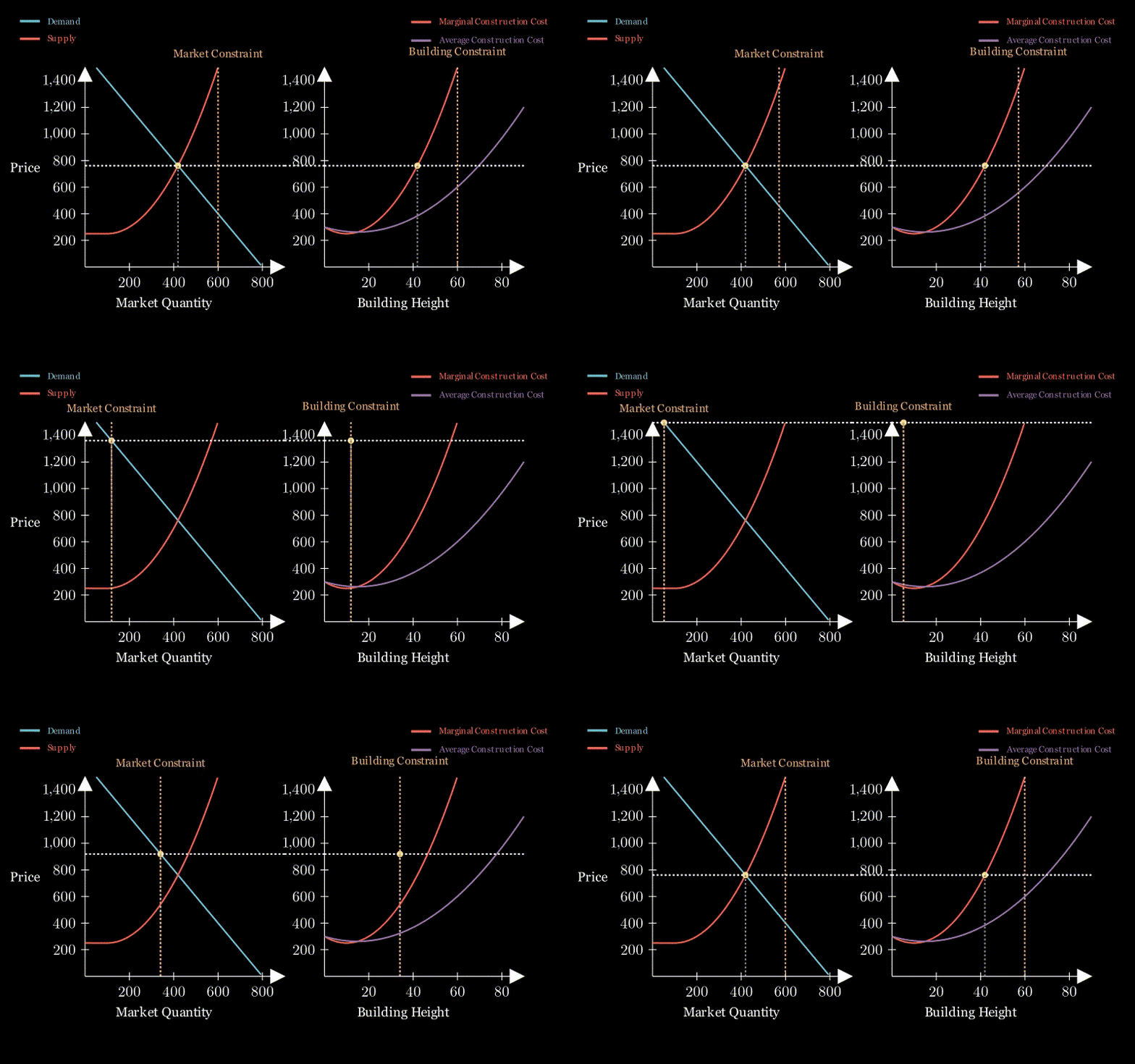
Restricting development to “low-cost” building types is a supply constraint. Even if high-rise development increases the average cost of construction, legalizing it shifts the supply curve rightwards, which is the only sustainable way to lower market prices.
Myth 2: People prefer lower density
To be sure, there has always been a market for dense urban living, but for most people, particularly as they achieve adulthood and start families, the preference has been for single family houses or townhouses…. 80 per cent of Americans prefer this kind of housing
Families with kids want three-bedroom homes, and they don’t want to be on the 57th floor somewhere. They don’t want to be in a six-floor apartment along a busy arterial.
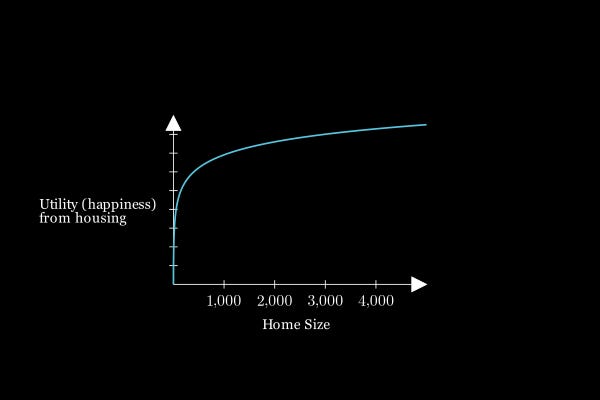
What’s true is that preferences exist for larger homes. People generally like expensive options more. Three-ply toilet paper is preferred to one-ply toilet paper. An all-wheel drive car is preferred to a two-wheel drive one. An unlimited data plan is preferred to a 5GB a month data plan. A large home is preferred to a small home.
Economically, this reflects the positive marginal utility of consumption. Or in other words, ignoring costs, people prefer to consume more rather than less.
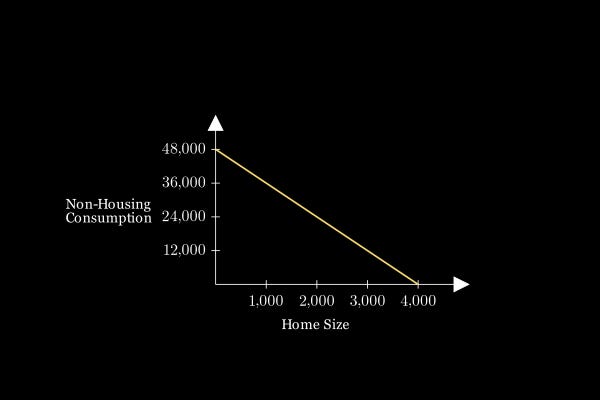
But people face budget constraints. A certain amount of income has to pay for housing, and a certain amount has to pay for other things like transportation, food, and childcare.
Even if larger homes are preferred, many households will choose smaller ones because larger homes cost more. Spending more money on one thing means spending less on other things. Ultimately forcing someone to have a larger home may make them less happy because of the trade-off.
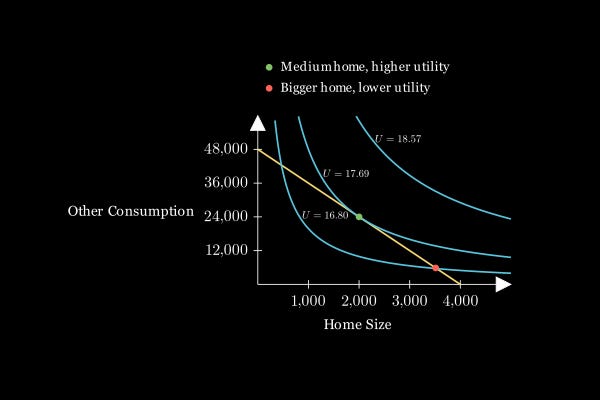
People cite surveys but survey responses reflect preferences in the absence of trade-offs. People may say “I want a bigger home” when ignoring higher costs, but if they thought a larger home was worth the cost, they’d probably have moved already.
Maybe it’s counterintuitive but if we want to help people afford homes with a larger square footage, we need to bring down prices and rents by allowing taller, denser housing forms to be built.
As it says in the RBA paper from the previous section,
Myth 3: If we allow high-rises everywhere then everything would be a high-rise
Some people think that if we allow high-rises everywhere everything would be a high-rise. There’s a meme about this. (the typos came from the anti-density meme creator)
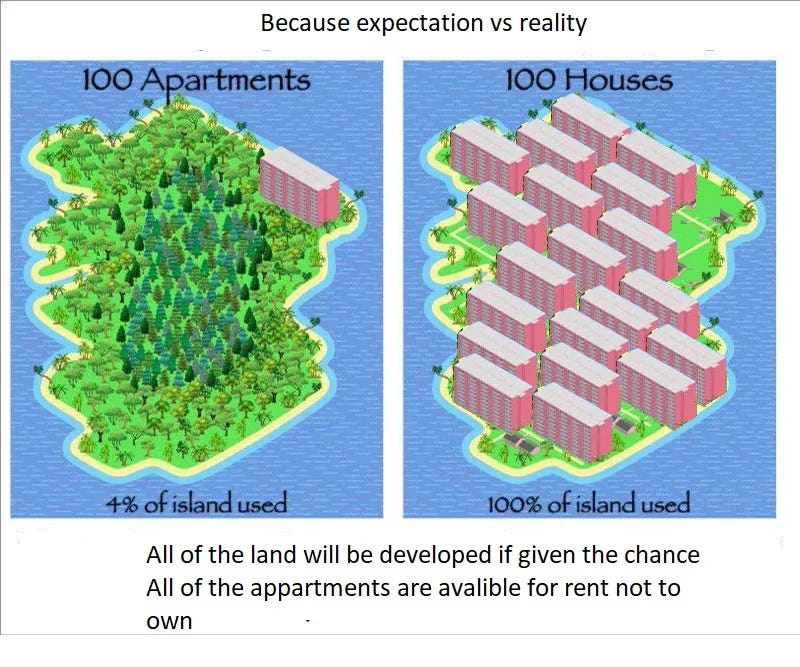
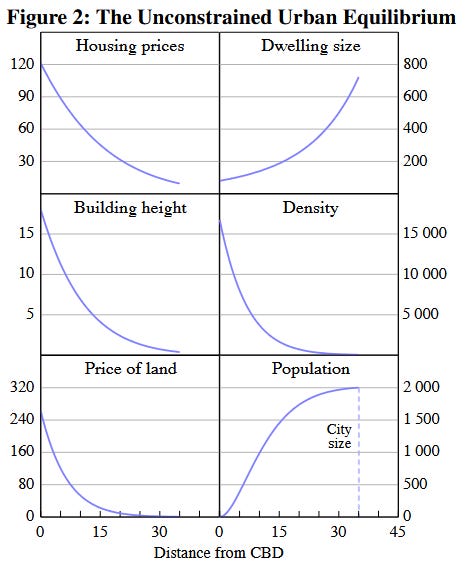
The standard urban economics model, also called the Alonso-Muth-Mills model, helps explain why this is wrong. Places that are far from where people want to work or go to school have low demand for housing because of the long commutes.
You don’t build high-rises where there isn’t much demand for housing.
This is neatly summarized in graphics from another Reserve Bank of Australia paper, “Urban Structure and Housing Prices: Some Evidence from Australian Cities”
Source: https://www.rba.gov.au/publications/rdp/2011/pdf/rdp2011-03.pdf
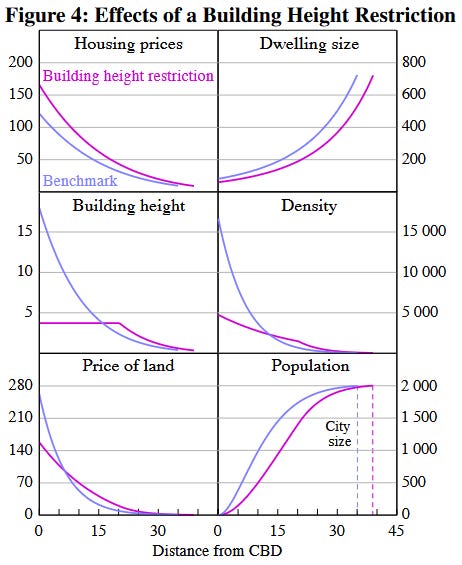
The model also shows that limiting density anywhere pushes people away from where they want to live and raises prices everywhere.
This is shown in another graphic from the same paper.
Source: https://www.rba.gov.au/publications/rdp/2011/pdf/rdp2011-03.pdf
Height restrictions,
1. increase prices everywhere
2. Reduce home sizes everywhere (of course most cities also have detached zoning and minimum lot sizes which reserve some land only for large detached homes)
3. Reduce heights in high-demand areas but actually increase heights in low-demand areas
4. Reduce the price of land in high-demand areas and increase the price in low-demand areas.
5. Increase the city size (aka cause urban sprawl)
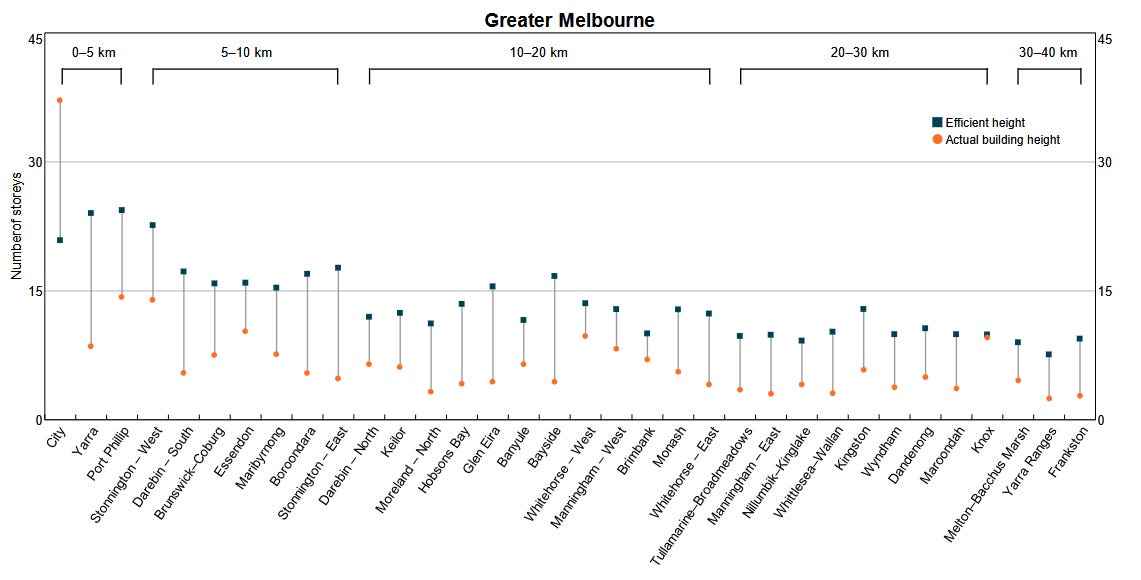
This has also been estimated empirically for example in the graphic below.
Source: https://www.rba.gov.au/publications/rdp/2020/pdf/rdp2020-04.pdf
No doubt people see super tall 60 floor towers in areas far from their city centers. The Alonso-Muth-Mills model also explains this: Widespread height restrictions increase housing prices which increase the height of the few lots that are granted upzoning on a site-specific basis.
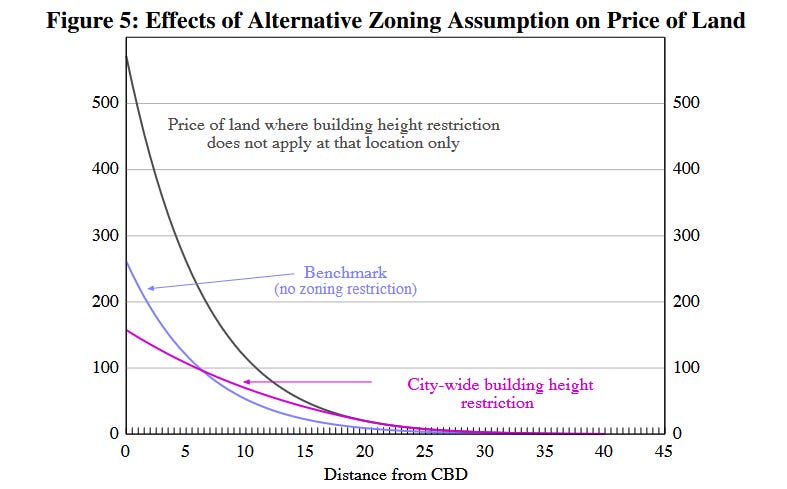
Source: https://www.rba.gov.au/publications/rdp/2011/pdf/rdp2011-03.pdf
For more on this you can read my prior article on how tall towers don’t cause the housing crisis, the housing crisis causes tall towers.
Myth 4: Allowing missing-middle means it gets built
This is the converse of the previous myth. It’s related to the Real Options Theory advocated by Cameron Murray. Despite the fact that Murray twists it to support his flavour of supply skepticism, it does have explanatory value.
Suppose there is a detached home whose efficient height is 30 floors. Permitting it to be a multiplex is unlikely to get housing built. If a developer still believes its efficient height is 30 floors, that optionality, weighted by the probability of future site-specific approval and discounting the costs posed by regulatory barriers and delays, will be capitalized into the land price today, making a multiplex project unlikely to be financially viable.
Permitting 100,000 detached homes whose efficient heights are all 30 floors to be multiplexes is unlikely to get housing built. Unfortunately many cities are at that level of disconnect between actual and efficient heights.
In fact, many expensive cities with hundreds of thousands of detached homes have implemented multiplex laws and in most cases, the amount of multiplexes built per year as a result is in the tens or hundreds for these reasons. Real Options Theory explains the paradox of how there can be a housing shortage and yet there is no rush to turn a detached home into a multiplex.
The simple accounting that many missing middle advocates do, multiplying the number of detached homes by the number of homes legalized by a new multiplex law, simply doesn’t reflect that developers want to build taller buildings and we’d all be better off letting them.
Indeed, one solution to possibly get the multiplex built is for cities to eliminate any chance of the lot ever having future upzoning. That would lower the land price today, but raise housing prices in the long run.
A better solution that gets more housing built and lowers housing prices is to just allow all lots to be built to their market efficient heights. Where multiplexes and other missing middle options are efficient, they’d get built too.
Conclusion
The missing middle is real and valuable for increasing housing options, but its impact on prices and density is limited by economic realities. Claiming that missing middle will automatically reduce costs or satisfy everyone’s preferences overlooks key market dynamics, consumer trade-offs, and the continuing need for high-rise development in urban cores.
We need the missing middle allowed where it is efficient. We need high-rise development allowed where it is efficient. Allowing arbitrary heights everywhere allows both.
Bonus myth: “Mid-rise is higher density than high-rise”. Paige Saunders has a great video debunking this one: